


Root canal treatment
Removes the infected nerve from inside a damaged tooth, cleans and seals the space, and lets you keep the tooth instead of losing it.
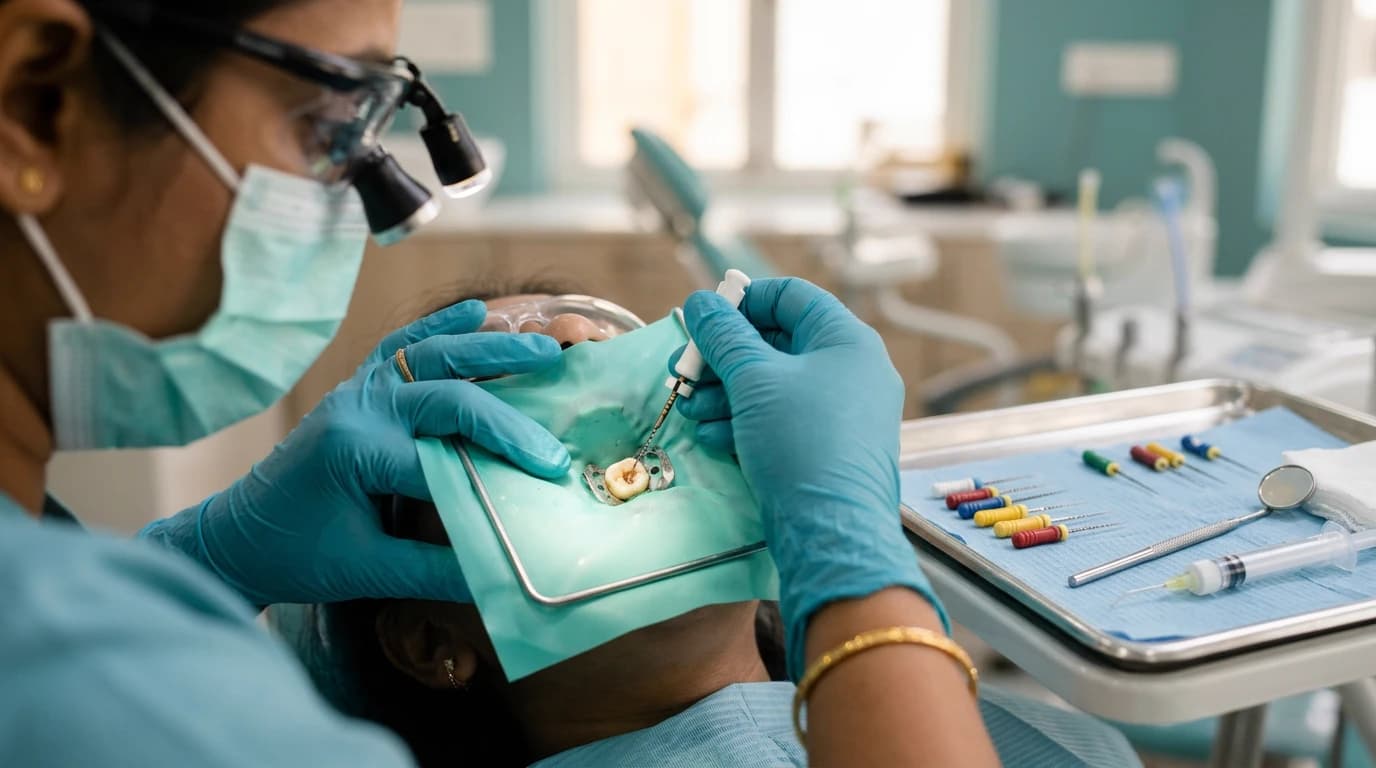
Root canal treatment in Hosur: what is involved
Inside every tooth is a soft core called the pulp, which holds its nerves and blood vessels. A deep cavity, a crack, repeated dental work or an injury can let bacteria reach it, and once the pulp is infected it cannot heal on its own. Left alone it leads to pain, swelling and eventually an abscess.
A root canal treatment removes the damaged pulp, cleans and shapes the empty canals, then fills and seals them so the infection cannot return. The tooth stays in place and keeps working. Most of the discomfort people associate with root canals comes from the infection beforehand; the treatment itself is done under local anaesthetic and feels much like having a filling.
Root canal treatment: step by step
We look at the tooth and take an X-ray to see how far the damage or infection has reached, and confirm the tooth can be saved.
The area is numbed with local anaesthetic, then a small opening is made in the top of the tooth to reach the pulp.
The pulp is removed, the canals are cleaned and shaped, and antimicrobial medicine is used if needed. They are then filled with a rubber-like sealing material and the opening is closed with a temporary filling.
At a follow-up visit the temporary filling is replaced with a permanent filling or a crown, which protects the treated tooth from further damage.
Good to know about Root canal treatment
Anyone whose tooth has an infected or badly damaged pulp but can still be restored. If the tooth cannot be saved, the alternative is removal followed by an implant or bridge, and we will explain both before you decide.
Expect numbness for a few hours, then some tenderness for a few days; it can take a couple of weeks to settle fully. Paracetamol or ibuprofen usually covers it. Go gently on the tooth until the permanent restoration is fitted, and keep brushing and flossing as normal. With good care a restored tooth can last a lifetime.
Guides and advice
Do root canals hurt? Do they cause illness? Is pulling the tooth better? What the evidence says about the most common myths.
When saving a tooth with a root canal makes sense, when an implant is the better route, and how the two compare on time, cost and healing.
First-aid steps for a knocked-out tooth, broken tooth, severe toothache, lost crown or filling, abscess and mouth injuries.
An examination and X-ray to find out whether a root canal can save the tooth. Treatment is only booked once you agree the plan.