


Dental fillings
Removes decay and rebuilds the tooth with a tooth-coloured material, so the bite is restored and the cavity cannot keep growing.
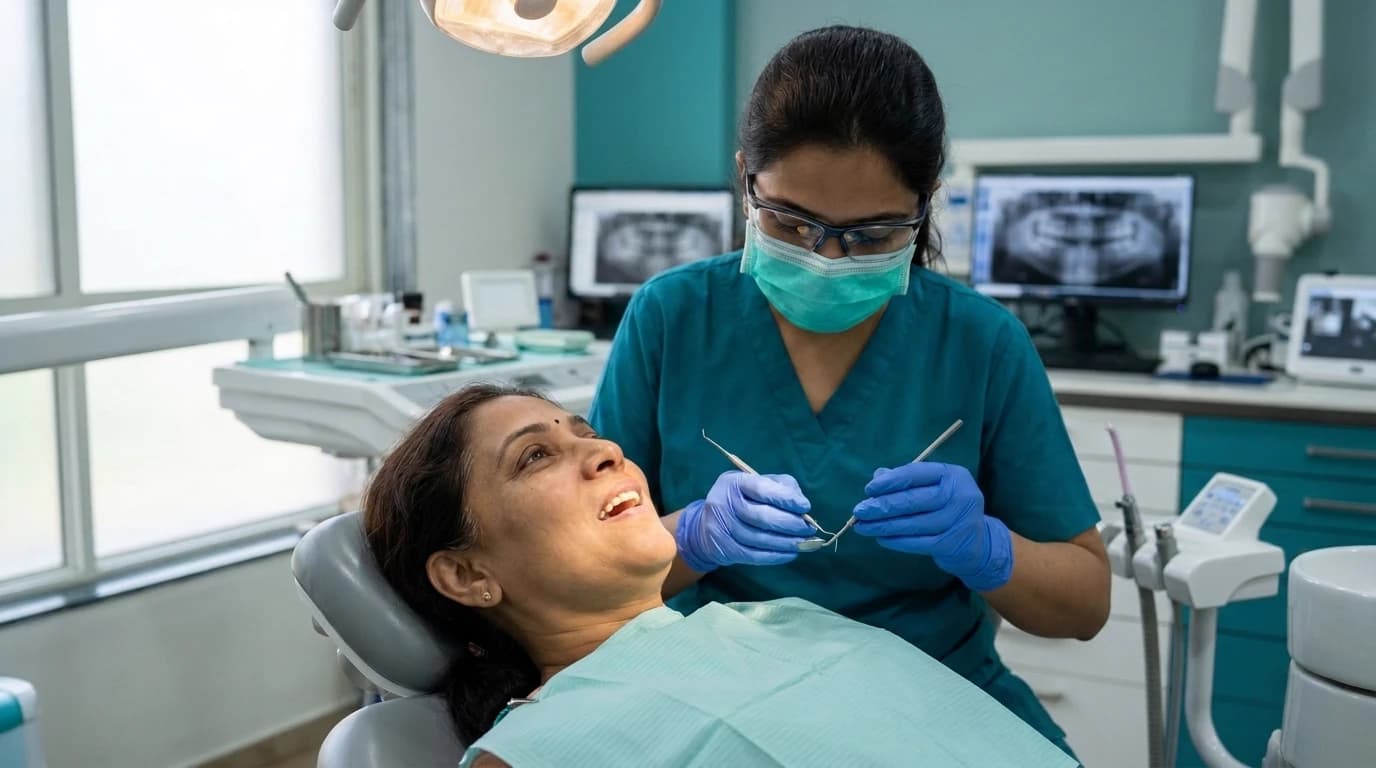
Dental fillings in Hosur: what is involved
A filling replaces the part of a tooth lost to decay. We numb the tooth, remove the decayed tissue, clean out the cavity and fill it, so bacteria cannot get back in and the tooth regains its shape and strength. Left untreated, a cavity keeps deepening until it reaches the nerve, which is when a root canal becomes necessary instead.
Tooth-coloured composite resin, a resin base with powdered glass or quartz, is a common choice because it blends with the tooth and is placed and hardened with a curing light in a single visit. Glass ionomer is another tooth-coloured option. When decay is too extensive for a direct filling, a porcelain or gold inlay or onlay made in a lab, which takes two visits, may be recommended.
Dental fillings: step by step
We examine the tooth and numb it with local anaesthetic, so you feel pressure but no pain.
The decayed tissue is removed with specialised instruments and the cavity is cleaned.
The filling material is placed into the cavity and, for composite, hardened with a curing light.
The edges are polished and smoothed, and we check that your bite feels normal before you leave.
Good to know about Dental fillings
Composite and glass ionomer are tooth-coloured and placed in one visit. Porcelain and gold are made in a lab and cost more. Amalgam is silver-coloured and long-lasting, but it contains mercury and is not advised for pregnant women, children under six or people with some neurological conditions.
You can eat straight away, but wait for the numbness to wear off so you do not bite your cheek. Some sensitivity and gum soreness for a week or two is normal, and ibuprofen helps. Get in touch promptly for severe pain that tablets do not touch, facial swelling or a fever.
Guides and advice
Why teeth hurt with hot, cold or sweet food, what you can do at home, and the signs that sensitivity needs a dentist.
How long to brush, which toothpaste to choose, when to floss, why not to rinse straight after brushing, and when to replace your toothbrush.
A hole, sensitivity or a rough edge? We examine the tooth and explain the options before treating it.