


Cavity care for kids
Quick, comfortable treatment for decay in baby teeth, using methods sized for small mouths.
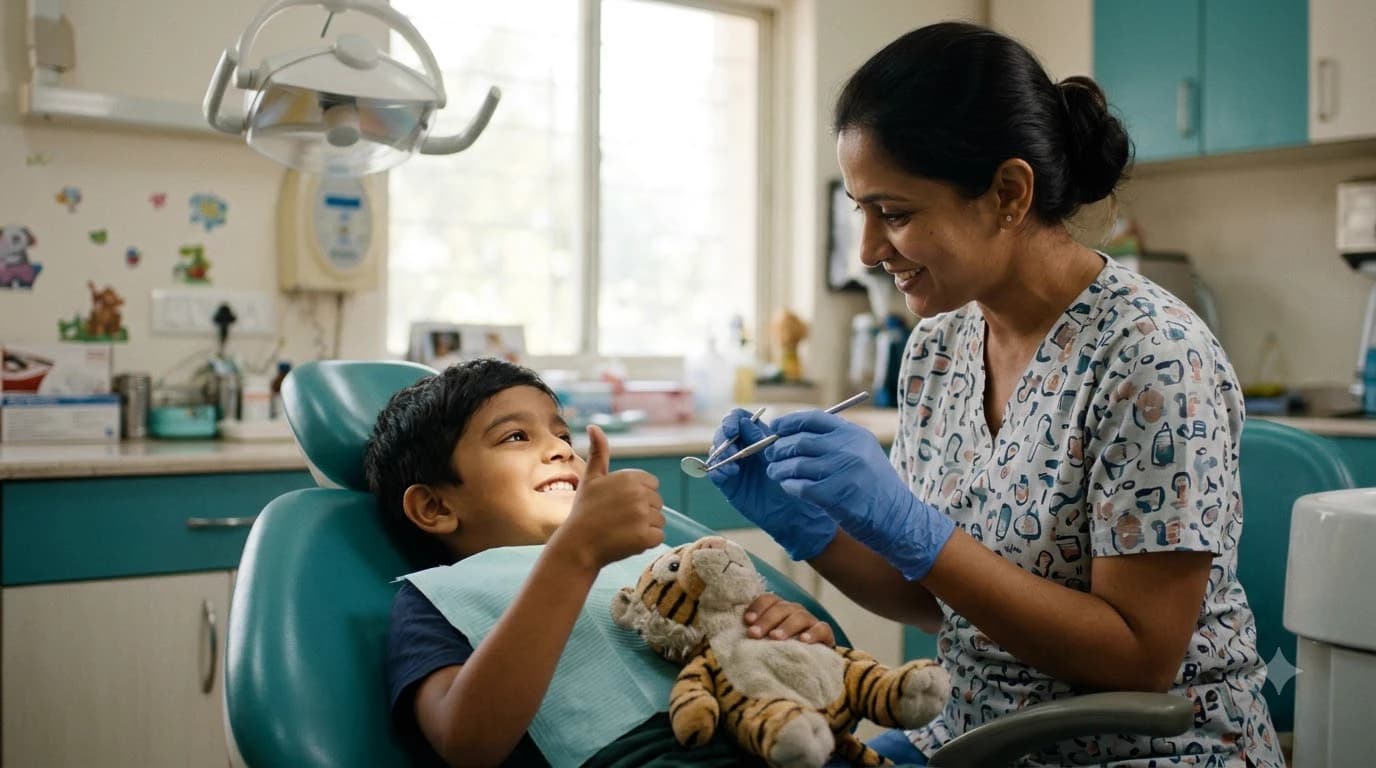
Cavity care for kids in Hosur: what is involved
Baby teeth get cavities too, and they need treating. Untreated decay causes pain, can spread to infection, and risks losing the tooth before its adult replacement is ready, which can affect spacing. The right treatment depends on how far the decay has gone: small cavities can be filled, while larger ones, especially where the decay has reached the nerve, need the strength of a crown.
For young or anxious children, silver diamine fluoride is a quick, painless liquid brushed on to the cavity to stop or slow it, with no injection and no drilling. When decay reaches the nerve, a pulpotomy removes the infected part of the nerve in the crown and leaves the tooth and its root in place to hold space for the adult tooth. The tooth is then usually finished with a stainless steel crown, which lasts longer than any other restoration for baby teeth.
Cavity care for kids: step by step
We examine the tooth to find out how deep the decay goes and whether it has reached the nerve.
We explain the options to you and your child, from silver diamine fluoride to a filling or a crown, and agree the one that fits their age and the tooth.
Silver diamine fluoride is brushed on and left for 10 to 60 seconds. Fillings and crowns are usually done with local anaesthetic, so the tooth is comfortable.
We talk through brushing, diet and fluoride, and may add sealants to protect the other molars. Check-ups every six months catch problems early.
Good to know about Cavity care for kids
It permanently stains the treated cavity black, though the adult tooth that replaces a treated baby tooth will not be stained. It can be reapplied within three to twelve months if needed, and it does not always replace a filling: sometimes a cavity keeps growing and needs a filling, a crown or extraction.
Brush twice a day with fluoride toothpaste, a smear for under 3s and a pea-sized amount for ages 3 to 6, limit sugary drinks and snacks, and keep up six-monthly check-ups. Sealants and fluoride varnish give extra protection to teeth at risk.
Guides and advice
When a child's first dental visit should happen, how often to go back, what happens at check-ups and how to care for baby teeth.
How long to brush, which toothpaste to choose, when to floss, why not to rinse straight after brushing, and when to replace your toothbrush.
Spotted a dark mark, or has your child got toothache? We will examine, explain and treat gently.