


Fluoride & sealants
Two quick, painless treatments that strengthen enamel and seal the grooves where decay starts, for children and adults.
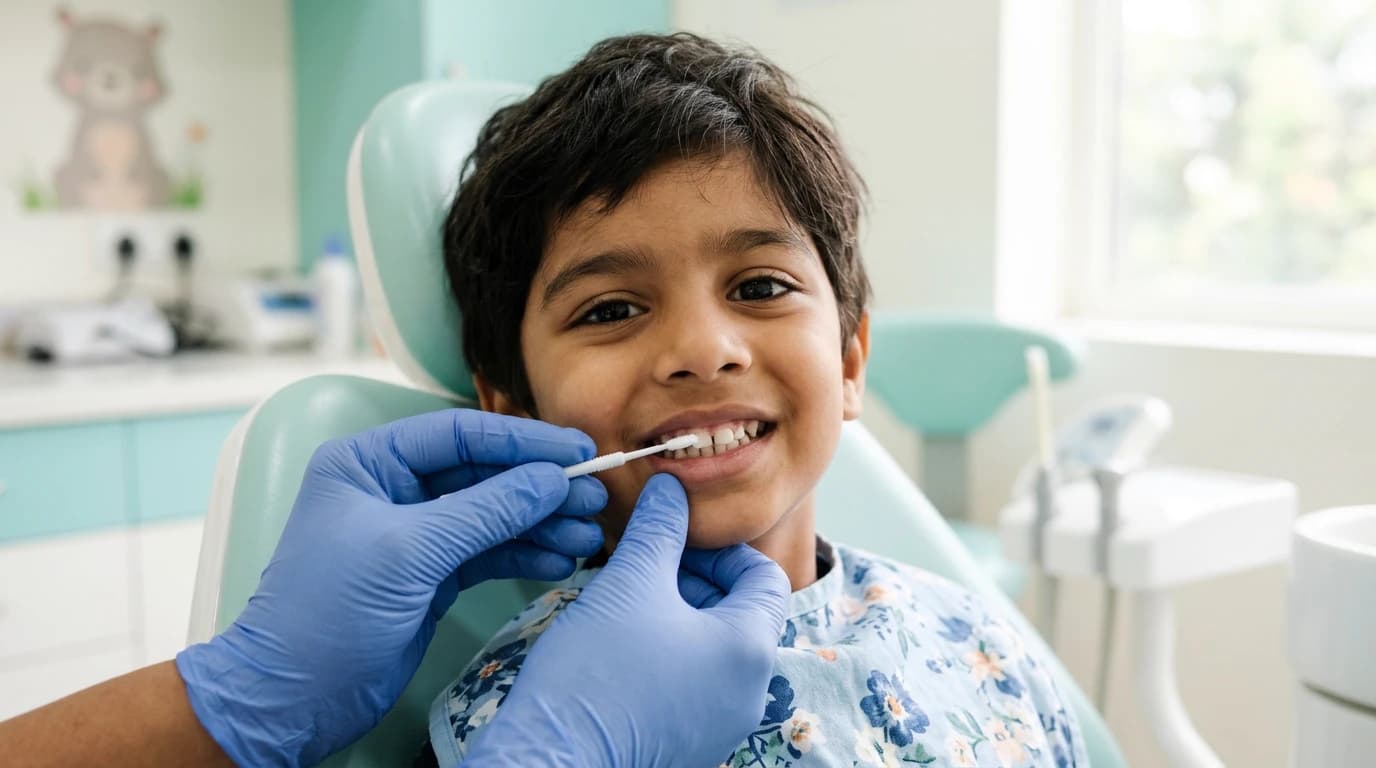
Fluoride & sealants in Hosur: what is involved
Fluoride repairs early enamel damage. After you eat or drink, bacteria in your mouth make acid that dissolves minerals from the tooth surface. Fluoride replaces those minerals, makes enamel more resistant to acid, and makes it harder for bacteria to stick. Alongside fluoride toothpaste at home, professional treatments, a varnish painted onto the teeth or a stronger gel or foam, help anyone at higher risk of decay.
Sealants protect the chewing surfaces of the back teeth. These surfaces have deep grooves where food and bacteria collect and a toothbrush cannot reach. A thin resin coating painted into the grooves and set with a curing light gives them a smooth, protective surface. Sealants go on best soon after the adult molars arrive, around ages 6 and 12, though adults with no decay or fillings in their molars can have them too.
Fluoride & sealants: step by step
We look at your teeth and how likely you are to get cavities, then recommend fluoride, sealants or both.
Varnish is painted directly onto the teeth and stays in contact for hours. Gel or foam is a higher-strength option held in place for one to four minutes. Treatments are repeated at regular intervals.
Teeth are cleaned and dried, the surface is lightly roughened with a conditioning solution, rinsed, then the sealant is painted on and hardened with a curing light. It takes just minutes and is painless.
We check sealants at your regular visits. Very hard, sticky or chewy foods can chip them, and they are replaced when worn.
Good to know about Fluoride & sealants
Children and teenagers benefit most, especially as their adult molars come through. Adults can too: fluoride helps both age groups, and adults with no decay or fillings in their molars can have sealants.
You can eat and drink normally after a sealant. Brush twice a day with fluoride toothpaste, a pea-sized amount for ages 3 to 6 and a grain of rice for under 3, and keep up six-monthly check-ups so we can monitor the sealants.
Guides and advice
When a child's first dental visit should happen, how often to go back, what happens at check-ups and how to care for baby teeth.
How long to brush, which toothpaste to choose, when to floss, why not to rinse straight after brushing, and when to replace your toothbrush.
A quick, comfortable appointment to protect teeth against decay. We will advise which treatment suits your cavity risk.