
Laser surgery
Dental lasers for precise, minimally invasive work on the gums and soft tissue of the mouth, with less bleeding and a gentler recovery.
Laser surgery in Hosur: what is involved
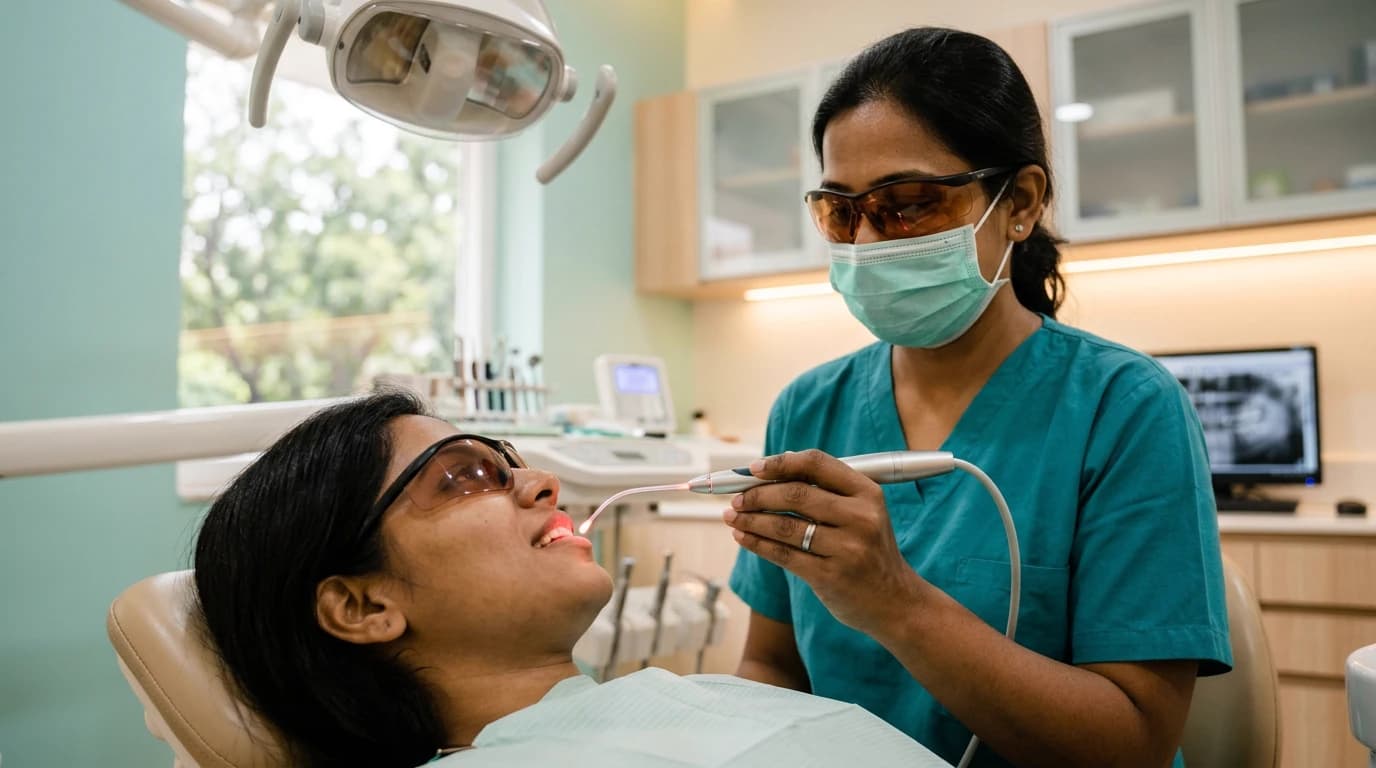
A dental laser uses focused light energy to cut, reshape or remove tissue, or to destroy bacteria. Soft-tissue lasers work on the gums and the lining of the mouth, and hard-tissue lasers can work on tooth structure. They sit alongside conventional instruments and are one tool among many, not a replacement for them.
We use laser technology for gum treatment and soft-tissue surgery, where it removes diseased tissue precisely and spares the healthy tissue around it. Because lasers promote clotting, there is usually less bleeding, and healing can be quicker. You are still numbed with local anaesthetic, and we will tell you honestly when a conventional approach is the better choice.
Laser surgery: step by step
We examine the area, explain whether a laser is the right tool, and agree what the treatment will involve.
The area is numbed, and you wear protective eyewear while the laser is in use.
The laser removes or reshapes the diseased or excess tissue with precision, and seals small blood vessels as it works.
We give you simple instructions for the healing period and check progress at a review.
Good to know about Laser surgery
Typical uses include treating gum disease, reshaping the gum line, releasing a tongue-tie or lip-tie (frenectomy), treating mouth ulcers and cold sores, disinfecting root canals, and reducing tooth sensitivity.
Risks are small, but any heat-based tool can damage healthy tissue if it is used badly. Most dental treatment can be done conventionally, and laser is simply another option, so we recommend it when it will give you a better experience or result.
Guides and advice
Bleeding gums aren't normal. What gum disease is, what causes it, how it progresses, and what keeps your gums healthy.
We will assess whether a laser is the best tool for your gum or soft-tissue problem.