


Spacing & diastema
Closing gaps between teeth with bonding, veneers, braces or aligners, once we have worked out why the gap is there.
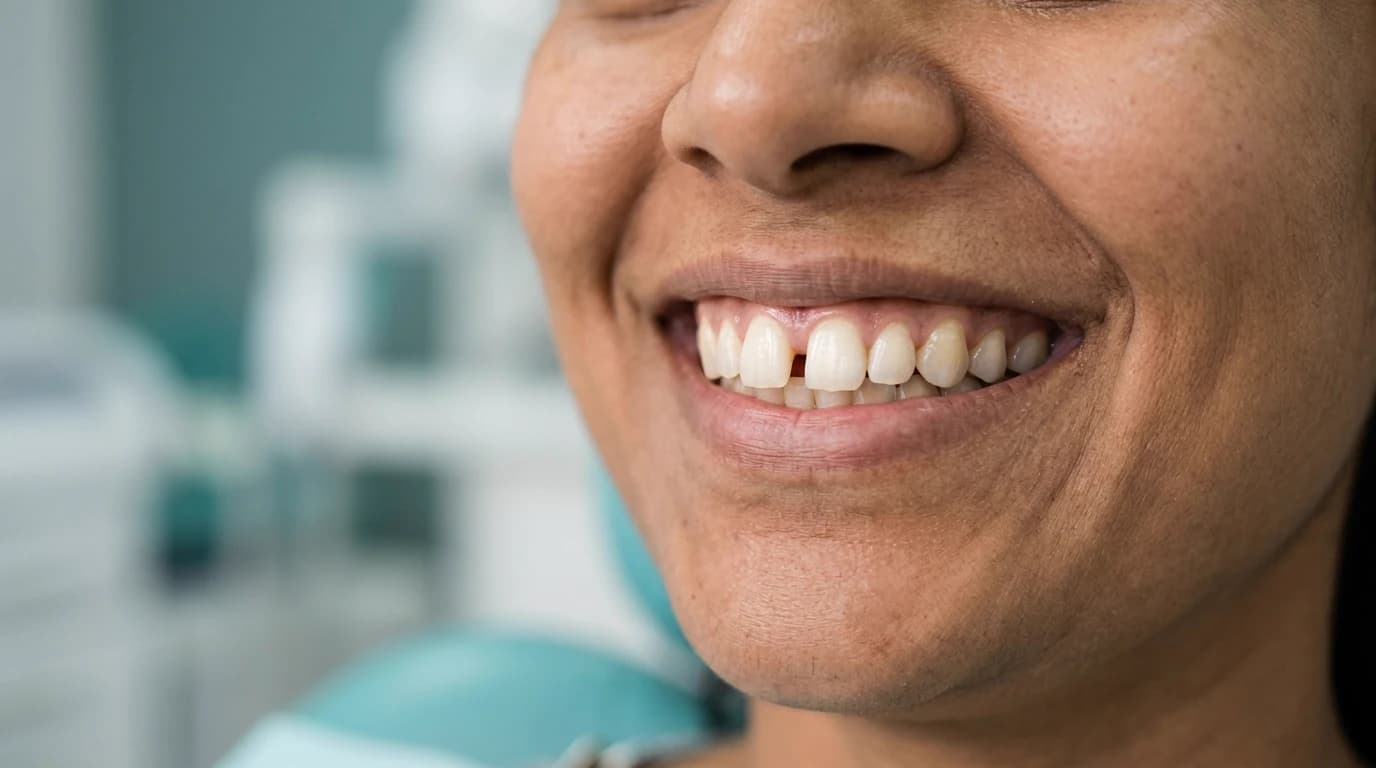
Spacing & diastema in Hosur: what is involved
A diastema is a gap between two teeth, most often between the upper front teeth, though gaps can appear anywhere. Spacing may be one clear gap or small spaces across several teeth. Causes include teeth that are small for the jaw, an oversized frenum (the band of tissue joining the lip to the gum), missing teeth that let neighbours drift, habits such as thumb-sucking or tongue-thrusting, gum disease, and family traits. In children a gap often closes by itself as the adult teeth arrive.
Most gaps are harmless, but a new or widening gap can signal gum disease, so it is worth having it checked. Treatment depends on the cause and the size of the gap: bonding or veneers to close it cosmetically, braces or clear aligners to move the teeth together, a frenectomy to release an oversized frenum, and an implant or bridge where a missing tooth is the cause.
Spacing & diastema: step by step
We examine your teeth, gums and bite, and take X-rays if needed, to see why the gap is there and whether it is changing.
We explain every way of closing the gap, how long each takes and lasts, and recommend the lightest option that will do the job.
Bonding or veneers fill the space. Braces or aligners move the teeth together over time, and a frenectomy releases the tissue first where that is the cause.
Teeth that have been moved tend to drift back, so a retainer holds the result, worn as we advise.
Good to know about Spacing & diastema
Bonding applies tooth-coloured resin directly to the teeth and lasts around five to eight years. Veneers last longer, five to fifteen years, but remove some enamel. Braces and aligners close gaps by moving teeth without removing enamel, but take longer and need a retainer afterwards.
A gap can return if the cause is not treated: a large frenum that pulls the teeth apart, gum disease that loosens them, a thumb or tongue habit, or a retainer that is not worn after braces. Treating the cause is what makes the result last.
Guides and advice
How clear aligners work, how many hours a day to wear them, how long treatment takes, and what they can and can't fix.
Crowding, crossbites, thumb-sucking and more: the signs worth checking, and why a screening around age 7 is recommended.
We will find the cause of your gap and explain every way of closing it.