


Braces & retainers
Fixed braces that correct bites and crowding, followed by retainers that hold the straight result in place.
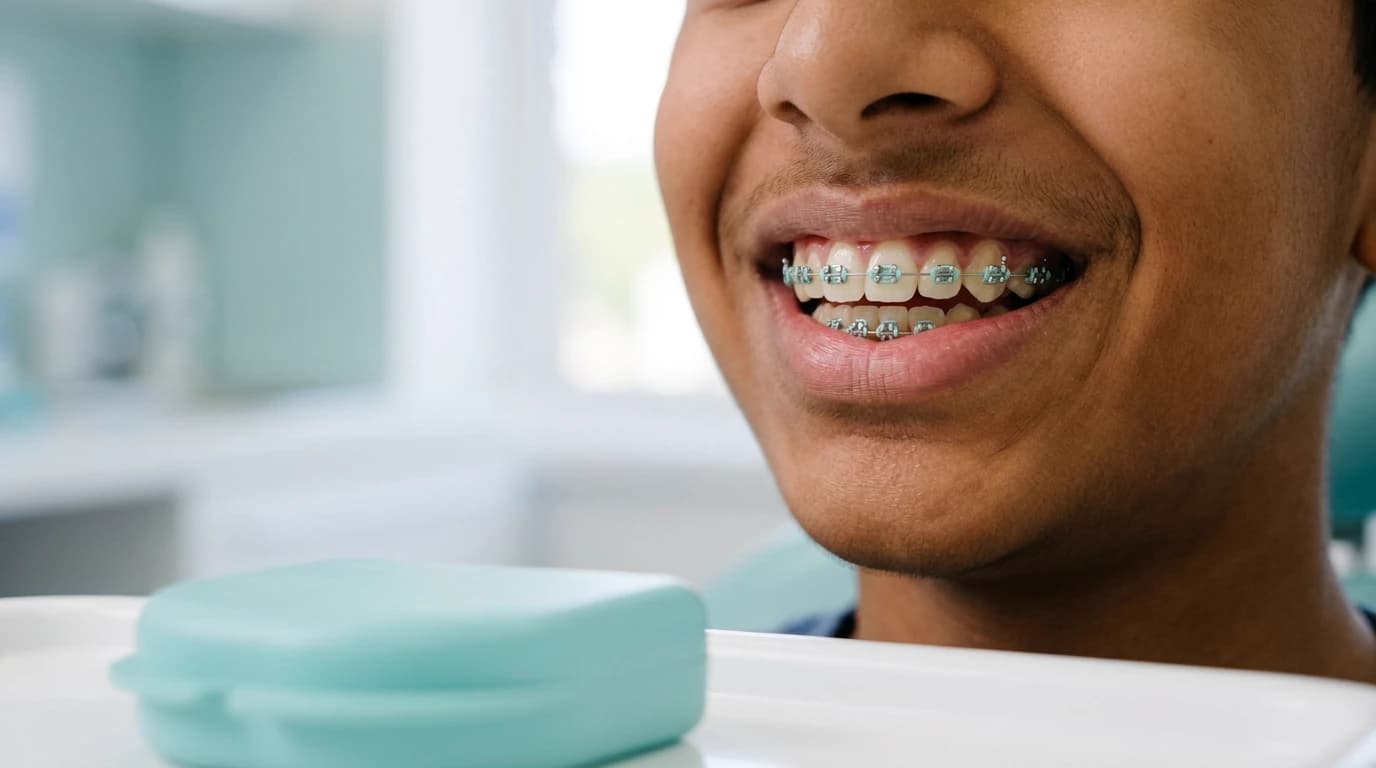
Braces & retainers in Hosur: what is involved
Braces use brackets bonded to the teeth and wires that apply mild, constant pressure to move the teeth into position over time, with elastic bands added where the bite needs correcting. They handle a wide range of problems, including severe crowding, bad bites, jaw misalignment and impacted teeth, and are often the better choice for complex cases. They come in several types, including traditional metal, tooth-coloured ceramic, self-ligating and lingual braces, and we will go through which suits your case.
Once the braces come off, retainers hold the teeth in their new positions while the gum and bone around them settle. Without a retainer, teeth tend to drift back towards where they started. Retainers can be fixed, bonded to the teeth, or removable, either clear plastic (Essix) or wire and acrylic (Hawley).
Braces & retainers: step by step
One or two visits to examine your teeth and bite, take the records we need, and explain the options, the likely timeline and what treatment involves.
Brackets are bonded to the teeth and the first wire is fitted. This is the longest single appointment of the treatment.
Every four to twelve weeks we adjust the wires to keep the teeth moving. Most people wear braces for 12 to 24 months, longer for complex cases.
The braces are removed and a retainer is fitted straight away to hold your new smile in position.
Good to know about Braces & retainers
Brush carefully around the brackets with fluoride toothpaste, use interdental brushes, and avoid hard, sticky, crunchy and sugary food. Call us if a bracket or wire breaks, or if teeth stay painful for more than a few days after an adjustment.
A typical routine is to wear a removable retainer every night for the first year, then on alternate nights, and then indefinitely to keep your teeth where they are. Clean it with liquid soap and water, not toothpaste or hot water, and keep it in its box when it is not in your mouth.
Guides and advice
A fair comparison of braces and clear aligners: what each treats, how long they take and what they ask of you day to day.
Crowding, crossbites, thumb-sucking and more: the signs worth checking, and why a screening around age 7 is recommended.
An assessment of your bite, your options and how long treatment is likely to take.