


TMJ disorders
Assessment and treatment for jaw pain, clicking and locking, and the headaches and earaches that often go with them.
TMJ disorders in Hosur: what is involved
The temporomandibular joints connect your lower jaw to your skull, one on each side near the ears, and let you chew, talk and yawn. TMJ disorders affect these joints and the muscles around them. Typical symptoms are jaw or facial pain, clicking, popping or grating when you open or close, a jaw that locks or opens only partly, headaches, earache, toothache, and neck or shoulder discomfort, and sometimes visibly worn teeth from grinding.
Causes are often a mix: clenching or grinding the teeth, stress and muscle tension, a jaw injury, arthritis, a bite that does not fit together well, and a displaced disc in the joint. Treatment starts with a careful examination of the jaw and bite, with X-rays or other scans if needed, and usually begins with simple, reversible steps. Surgery is rarely needed and is kept for cases that do not respond to other treatment.
TMJ disorders: step by step
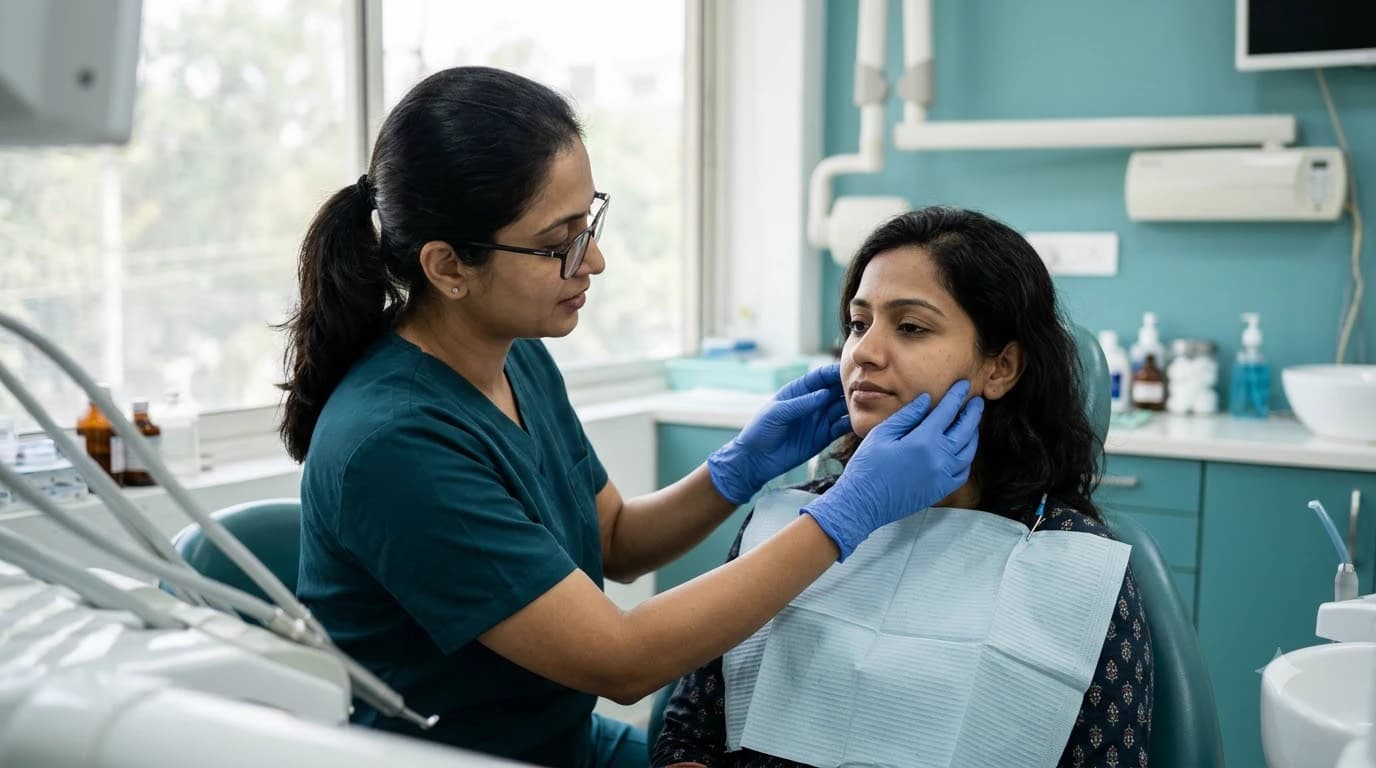
We examine how your jaw moves, feel the muscles for tenderness, check your bite, and take X-rays or other scans if we need to see the joint.
Soft foods, heat or cold packs and pain relief calm the joint and muscles while you avoid habits that irritate them.
A mouth guard made to fit your teeth protects them and lets the jaw muscles relax, particularly if you clench or grind at night.
Stretching and strengthening exercises restore movement, and we review your progress and adjust the plan as needed.
Good to know about TMJ disorders
Eat soft foods, avoid chewing gum and non-food items, take smaller bites, avoid opening wide, and use heat or ice on the sore area. Good posture and ways to ease stress can reduce clenching.
Some people recover within a week or two, while others need ongoing management. With early diagnosis and the right treatment, TMJ disorders are often manageable and sometimes curable. The sooner you have it checked, the simpler treatment usually is.
An examination of your jaw, bite and habits, and a plan to ease the pain.