Jaw fracture treatment
Diagnosis and treatment for a broken jaw, so the bone heals in the right position and chewing, speech and bite return to normal.
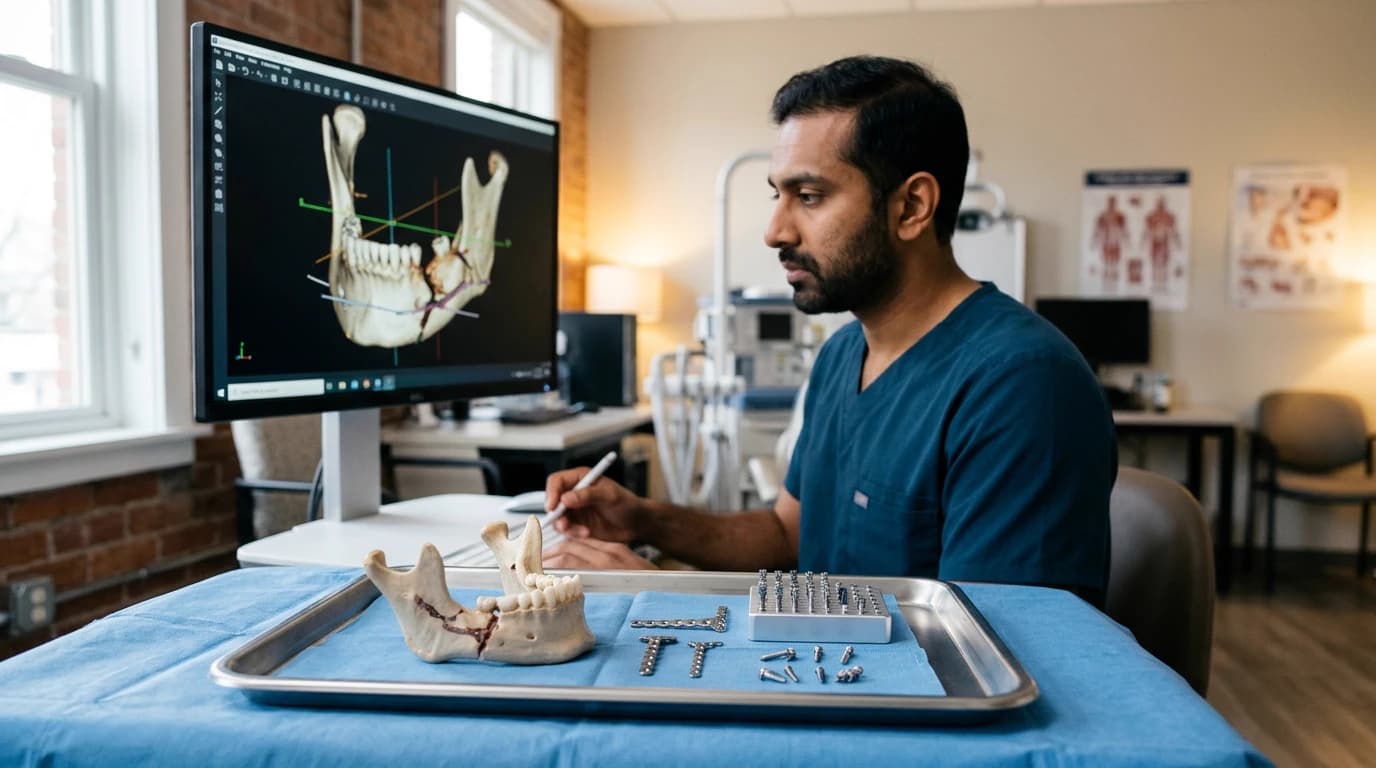
Jaw fracture treatment in Hosur: what is involved
A fractured jaw, or mandibular fracture, is a break in the lower jawbone, usually after a blow, a fall or an accident. Typical signs are pain, swelling and bruising of the jaw, difficulty opening or closing your mouth, a bite that no longer fits together, bleeding in the mouth, and numbness of the lip, chin or gums. It always needs prompt assessment.
Diagnosis uses X-rays and often a CT scan to show where the bone has broken. A stable fracture that has barely moved may heal with rest and a soft diet. Displaced fractures are usually treated with small plates and screws that hold the bone in position, or by wiring the upper and lower teeth together for a time, most often under general anaesthetic. If your fracture needs surgery, we explain how and where it will be done. After treatment you eat soft food while the bone heals, and we review progress regularly.
Jaw fracture treatment: step by step
We examine your jaw, check how your teeth meet, and arrange X-rays or a CT scan to see exactly where the bone has broken.
We explain whether the fracture can heal without surgery or needs fixing with plates and screws or wiring, and what each involves.
The bone is held in the correct position so it can heal, with the bite checked so your teeth still meet properly.
You eat soft food and avoid strenuous activity while the bone knits, which takes several weeks. Regular reviews check healing and the bite.
Good to know about Jaw fracture treatment
Get your jaw checked after any blow if there is pain, swelling, numbness, difficulty opening, or a bite that feels wrong. If you have trouble breathing or swallowing, go to an emergency department immediately.
Keep to a soft diet, keep your mouth clean as advised, and avoid strenuous activity and contact sport until you are cleared. Contact us if pain or swelling increases, you notice signs of infection, or your bite starts to feel wrong.
Guides and advice
First-aid steps for a knocked-out tooth, broken tooth, severe toothache, lost crown or filling, abscess and mouth injuries.
Pain, swelling or a bite that no longer fits after an injury needs prompt assessment.