


Wisdom tooth removal
Imaging first, then removal of problem wisdom teeth under local anaesthetic or sedation, with clear aftercare so healing goes smoothly.
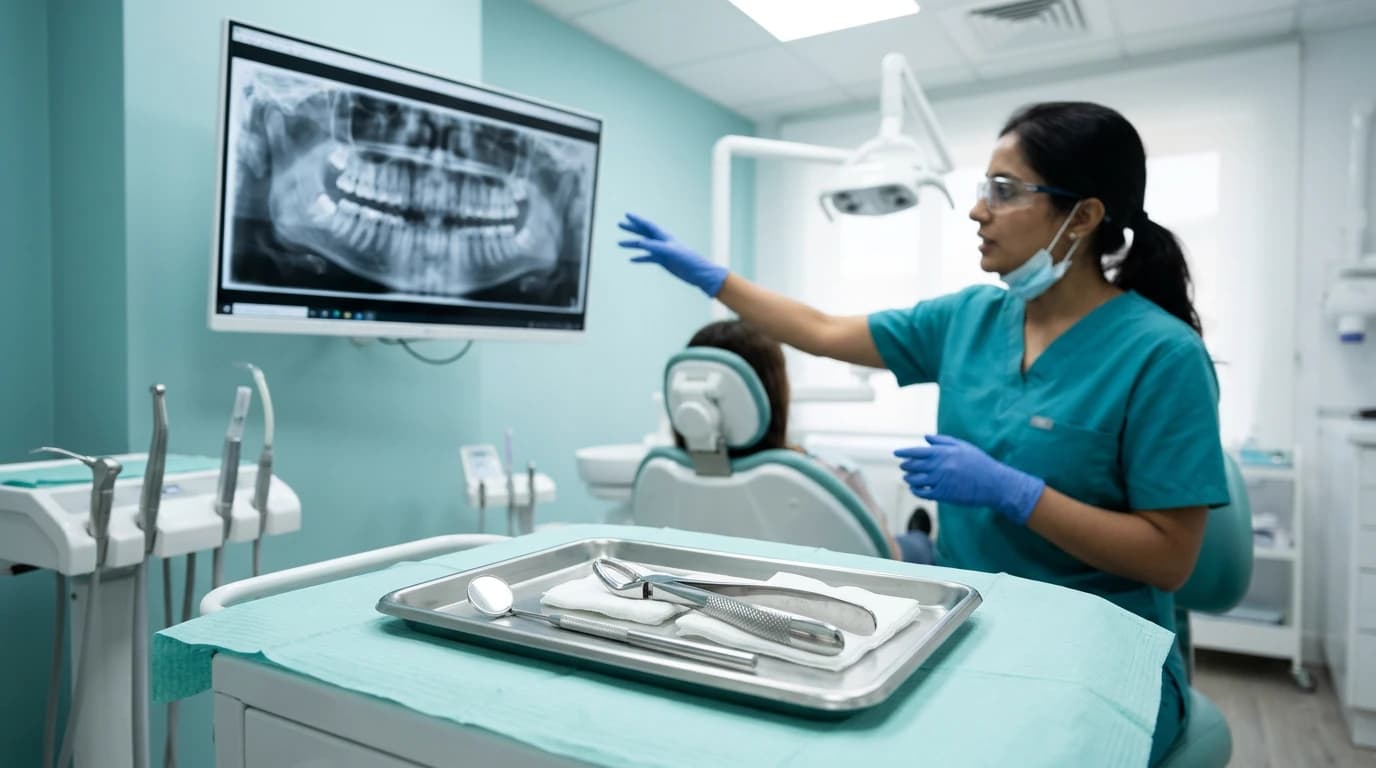
Wisdom tooth removal in Hosur: what is involved
Wisdom teeth are the last to arrive, and many do not have enough room. They can stay trapped under the gum or bone, grow sideways, or come through only partly, which can lead to pain, swelling, infection, decay in the tooth or its neighbour, gum disease and, less often, cysts. Removal is advised when a wisdom tooth is causing, or is likely to cause, these problems.
We start with an examination and X-rays to see exactly where the teeth sit. The area is numbed with local anaesthetic so you feel no pain, and sedation is an option if you are anxious or the tooth is a difficult one. Where needed, a small cut in the gum gives access, and the tooth is lifted out whole or in sections. The procedure usually takes under an hour, and stitches may be placed.
Wisdom tooth removal: step by step
We examine the area and take X-rays to see the position of the teeth, which tells us how straightforward removal will be.
Local anaesthetic numbs the area. If you choose sedation, you will be asked to fast beforehand, usually six to eight hours, and to arrange someone to take you home.
The gum is opened if needed, and the tooth is loosened and lifted out, sometimes in sections. Stitches are placed if they are needed.
You go home with written instructions. A follow-up visit around the two-week mark checks that healing is on track.
Good to know about Wisdom tooth removal
Expect bleeding, swelling and soreness for the first few days: a cold compress, rest and painkillers help. Eat soft foods, rinse gently with salt water as advised, and avoid straws, fizzy drinks, smoking, alcohol, hot drinks, exercise and heavy lifting at first. Most people are back to routine by about day five, and drinking through a straw is best avoided for at least five days.
A dry socket, where the blood clot is lost and bone is exposed, causes severe pain and usually appears three to five days after surgery. Also call if swelling is getting worse after three days, you have a fever above 38.8 °C (102 °F), pus, bleeding you cannot control, or pain that painkillers do not ease. Difficulty breathing or swallowing needs urgent care.
Guides and advice
First-aid steps for a knocked-out tooth, broken tooth, severe toothache, lost crown or filling, abscess and mouth injuries.
How long to brush, which toothpaste to choose, when to floss, why not to rinse straight after brushing, and when to replace your toothbrush.
An examination and X-ray to find out whether the tooth needs to come out, and how to make it comfortable.