


Sleep dentistry
Sedation options that help nervous patients, and anyone facing a longer treatment, stay calm and comfortable in the chair.
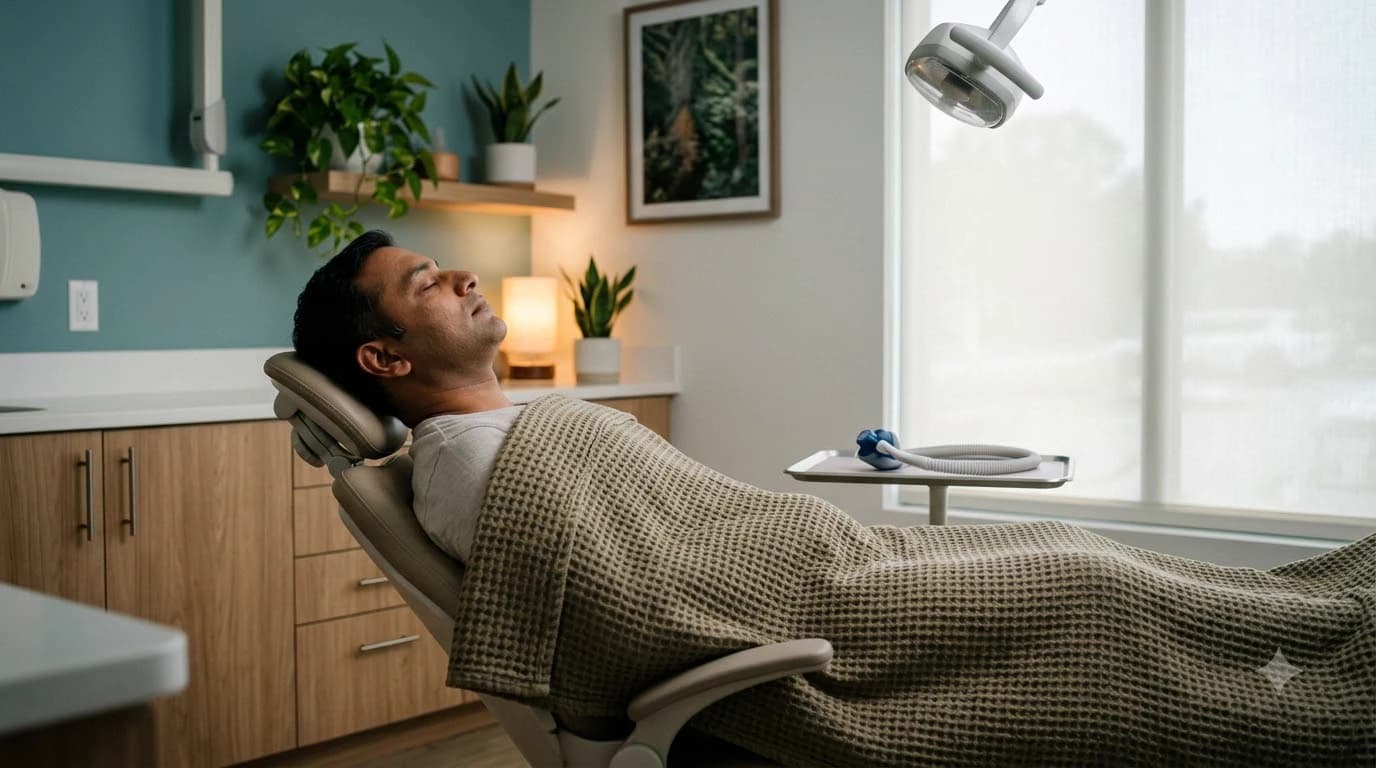
Sleep dentistry in Hosur: what is involved
Sleep dentistry, or sedation dentistry, uses medication to help you relax during treatment. It is not the same as being asleep: with most types you stay conscious and able to respond, while feeling calm and often remembering little afterwards. It suits people with dental fear or needle anxiety, a strong gag reflex, trouble keeping still, or a long treatment that is better done in fewer visits. Local anaesthetic is still used to numb the tooth.
Sedation comes in levels. Nitrous oxide, breathed through a small mask, works within three to five minutes, wears off quickly and lets you drive home. Oral sedation is a tablet taken about an hour beforehand and can leave you drowsy. IV sedation, given through a vein, is deeper and is monitored throughout. General anaesthesia, where you are fully unconscious, is kept for complex cases and given in a hospital or surgery-centre setting. What is suggested depends on your anxiety, your health, and the treatment and how long it will take.
Sleep dentistry: step by step
We talk through your worries and medical history, and ask about any medicines you take, since some can interact with sedation.
We recommend the lightest option that will keep you comfortable, and explain what it feels like and what to do beforehand, including fasting if needed.
You are sedated and numbed, and your heart rate and blood pressure are monitored while the treatment is carried out.
Nitrous oxide wears off within minutes. After oral or IV sedation you rest, go home with someone, and avoid driving for 24 hours.
Good to know about Sleep dentistry
Tell us about every medicine you take. For oral or IV sedation you will usually need to fast for several hours, and you must arrange for someone to take you home and stay with you for the rest of the day.
Sedation is monitored throughout. Dry mouth, drowsiness, headache and nausea are the most common effects and usually pass within a day. Children can be feverish or irritable for up to 48 hours afterwards.
Talk through your worries and which option would keep you comfortable.